1st Inclusive Cities Summer School successfully held in Berlin, Weimar and Erfurt
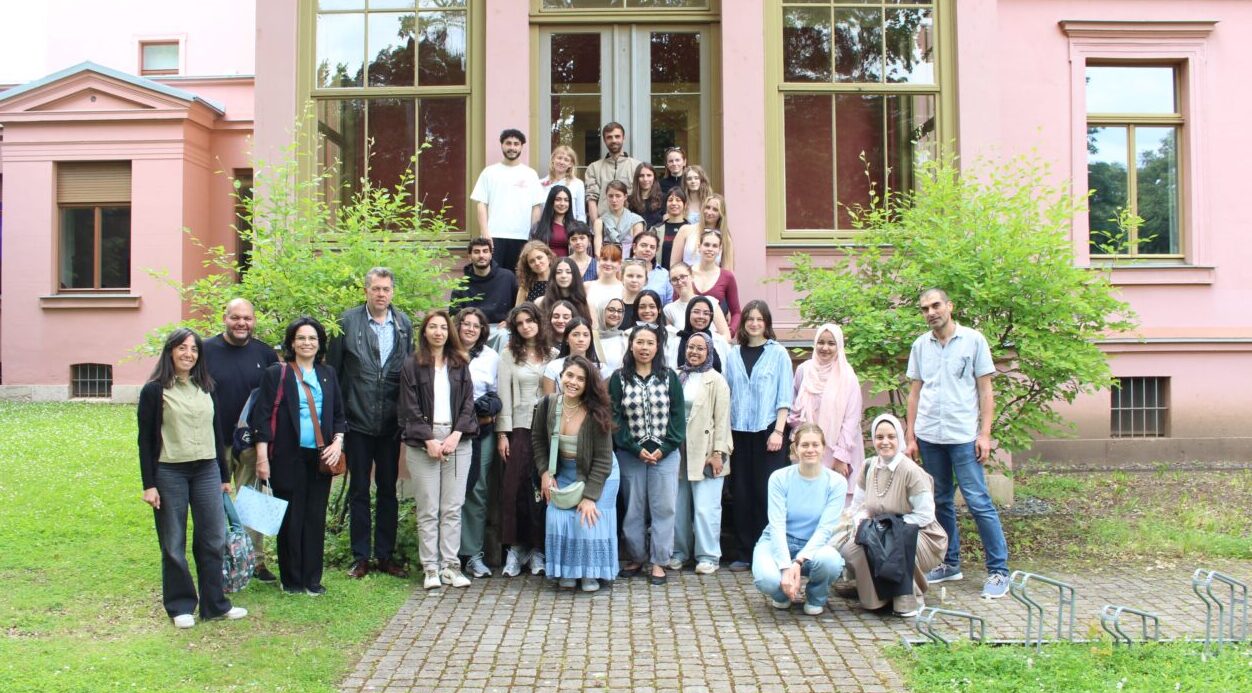
Under the title “Shaping Inclusive Cities: Dialogues on Participation and Placemaking”, the summer school brought together students, faculty, lecturers and researchers from Bauhaus-Universität Weimar (Germany), Notre Dame University-Louaize (Lebanon), Alexandria University (Egypt), the Scientific College of Design in Muscat (Oman), as well as representatives of non-university actors from practice and NGOs. In total, 36 participants took part, including 26 students, 6 academic staff members and 4 external contributors.
Over the course of the event, and through different learning formats, participants engaged with questions of community-based participation, placemaking and inclusive urban development across different urban contexts. The programme combined a study trip to Berlin, an academic dialogue event in Weimar, and a practice-oriented workshop titled “Safety, Identity, and Belonging in Public Spaces” in Weimar and Erfurt. The summer school aimed to promote international exchange and raise students’ awareness of issues surrounding community-based participation, placemaking, and inclusive urban development. The focus of the workshop was on how public spaces can be made safer, more accessible, and more inclusive.
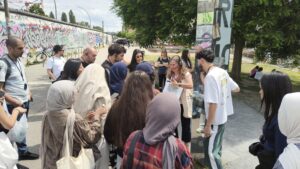
In Berlin, participants from Lebanon, Egypt and Oman visited and discussed a range of urban sites that exemplify issues of urban transformation, culture of remembrance, and participation. This included educational visits to the Reichstag Dome, the Berlin Wall Memorial, the East Side Gallery, Tempelhofer Feld, Floating University and Haus der Statistik. These visits provided a basis for reflecting on memory, public space, urban transformation and civic participation, and were complemented by expert inputs and discussions on how community-based participation is perceived, institutionalized and practiced in the German context.
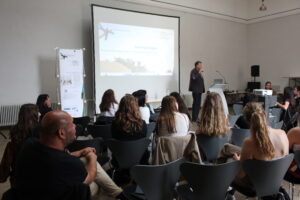
In Weimar, the programme continued with a city tour, a Bauhaus Walk and an Evening Dialogue that brought together cross-regional perspectives from Lebanon, Egypt, Oman and Germany. The dialogue opened space for exchange between participants, in which faculty and researchers from the partner universities presented and discussed their perspectives on participation, placemaking, inclusion and sustainability. The presentations covered a wide range of topics: from urban ecology in Lebanon (Dr. Nadine Hindi, NDU) and children’s placemaking in Alexandria (Nada El-Zoghby, AU) to “interpretive” sustainability (Dr. Ossama Hegazy, SCD) and the role of civil society organizations as a bridge between the state and the community in Oman (Dr. Shaharin Elham Annisa, MCTspaceLab) to the lives of migrants in the urban space of Muscat (Nusrat Jahan, BUW) and community-led regeneration in eastern Germany (Prof. Frank Eckardt, BUW).
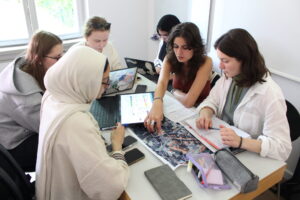
At the heart of the program was a three-day workshop led by Dr. Ammalia Podlaszewska of Culture Goes Europe (CGE), during which students in mixed international groups examined public spaces in Weimar. Through participatory methods, field-based observations and collaborative design exercises, participants examined how public spaces are experienced by different users. The focus was on questions of identity, belonging, and safety in public spaces, and how these questions can inform more inclusive approaches to placemaking. Finally, the groups presented their designs and concepts for a more inclusive design of the spaces they had examined—thereby translating the insights gained throughout the program into concrete ideas.
The Summer School in Weimar strengthened academic exchange between the partner institutions, deepened understanding of participatory approaches in different cultural contexts, and laid the foundation for further collaboration within the Inclusive Cities project. This intensive exchange between students and academic staff contributed to the project’s broader aim of strengthening cross-regional academic dialogue between Germany and countries of the Muslim world.