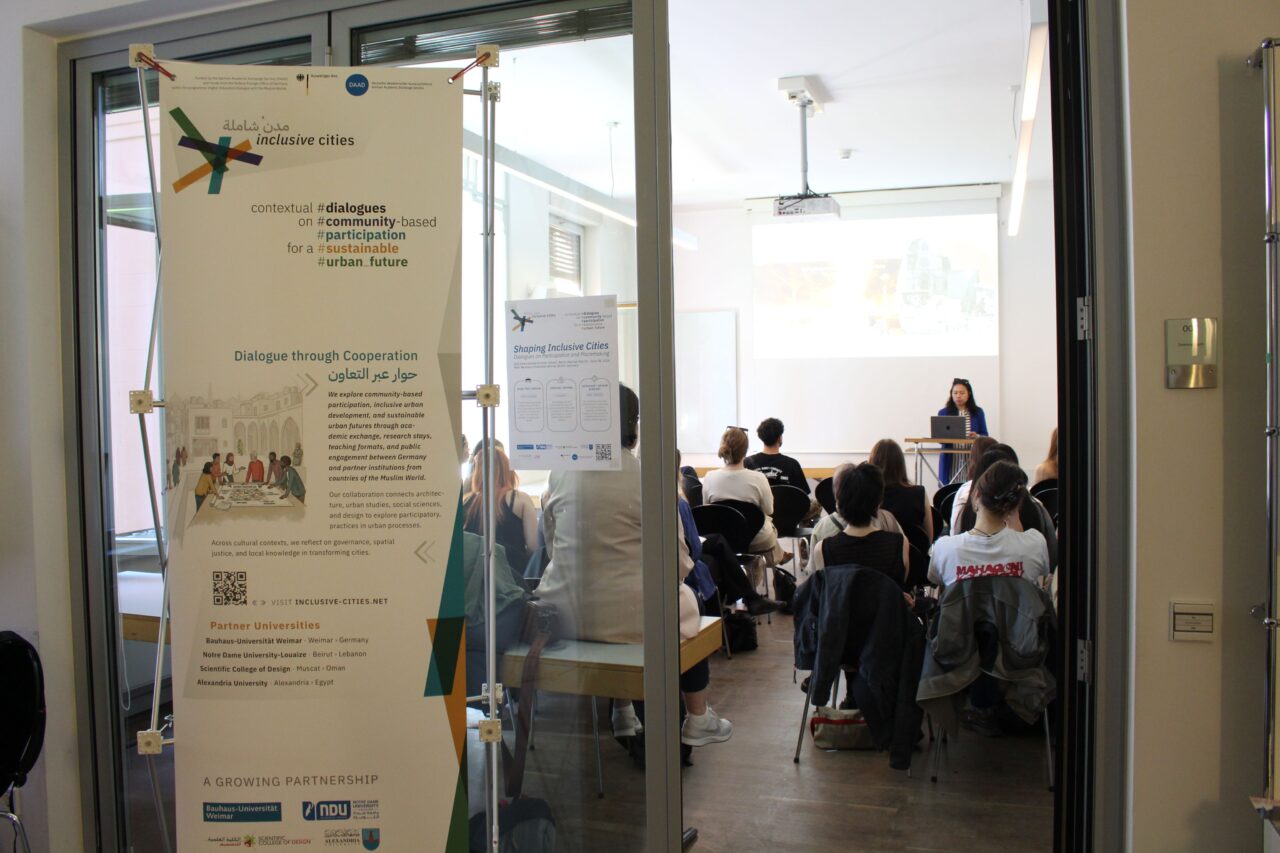
Funded by the DAAD and coordinated by the Bauhaus-Universität Weimar in Germany, this partnership includes Notre Dame University-Louaize from Lebanon, the Scientific College of Design-Muscat from Oman, and Alexandria University from Egypt. To strengthen the connection with local practice and civil-society perspectives, additional non-university partners are also anchored to this collaboration.
Mission
What we aim for
Inclusive Cities seeks to foster, strengthen and maintain cross-regional dialogue and collaboration between its partners around more inclusive ways of understanding and shaping urban spaces. It also aims to build evolving structures that sustain this dialogue and embed it within the participating institutions.
What we do
Inclusive Cities creates various interactive spaces for dialogue, collaborative exploration, mutual learning, co-production and joint reflection.
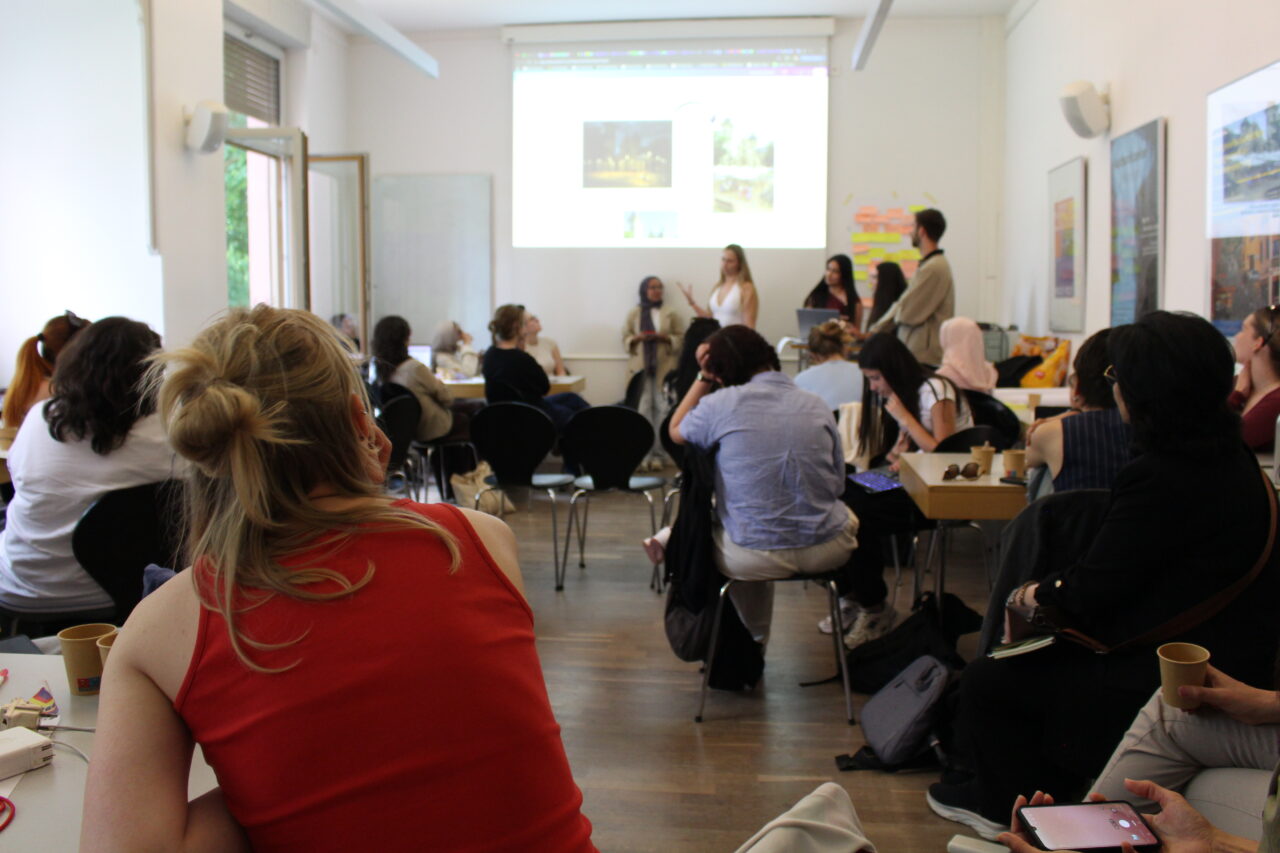
Through a range of exchange and collaboration formats, the project offers structured opportunities for students, researchers, teachers, social actors and practitioners to share knowledge and perspectives, compare methods and experiences, and jointly explore how community-based participation can support more inclusive and sustainable urban futures across different urban contexts. These exchanges address themes such as placemaking, belonging, spatial justice, inclusive urban design and sustainable urban development.
What we contribute to
Through its cooperation structures, activities and sustained dialogue, Inclusive Cities supports teaching, research and academic-societal exchange that respond to diverse urban realities and contribute to more inclusive, participatory and sustainable approaches to urban development.
Objectives
The project pursues five key objectives:
- Consolidating a Sustainable Partnership | Establish, consolidate, and maintain a resilient, specialized and dialogue-oriented partnership between participating institutions in Germany, Lebanon, Oman and Egypt.
- Course Development | Support the joint development and delivery of (thematically and pedagogically) upgraded relevant teaching formats at the participating partner institutions.
- Further Qualification | Provide students, researchers, early-career academics and teachers of the participating institutions with various opportunities for academic exchange, intercultural learning and professional development.
- Anchoring Themes for Dialogue | Establish and consolidate the topics of participation, inclusion and urban sustainability as shared thematic priorities for teaching, research and continual dialogue at the participating universities and provide platforms to disseminate relevant outputs.
- Linking with Societal Actors | Establish and strengthen links between higher education institutions, civil society and local urban actors promoting community-based participation in the urban context.
Approach
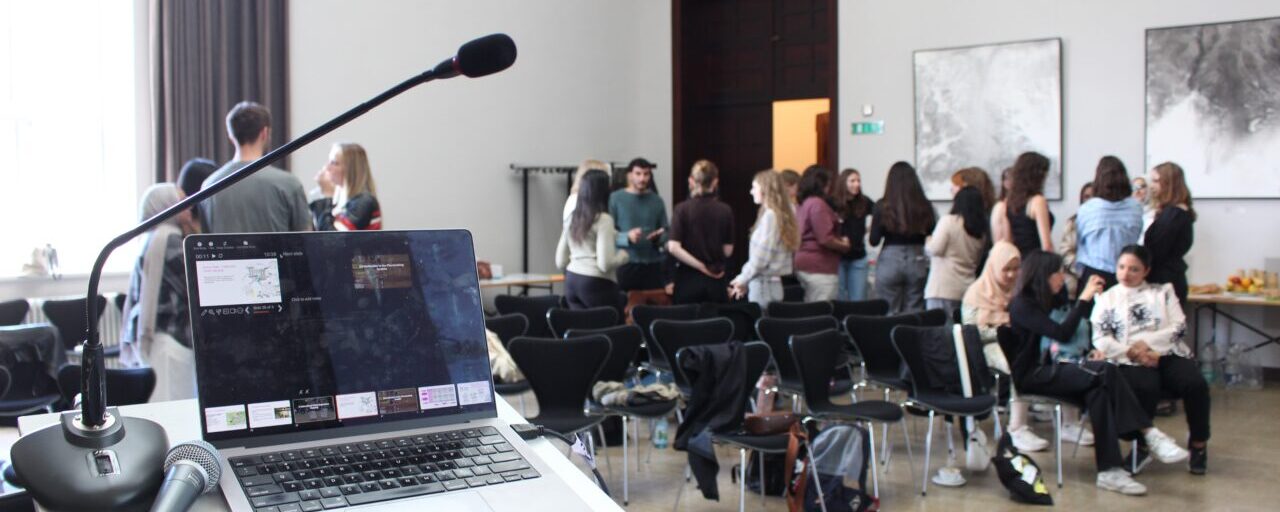
Our academic approach is grounded in a set of shared underlying premises and values that guide how the project understands participation, cooperation and urban inclusion.
Premises | Where we start from
- Participation in urban planning is context-dependent; it is shaped by specific social, political, cultural and institutional contexts. Participatory approaches therefore cannot simply be transferred unchanged from one context to another.
- Cross-contextual dialogue and comparative learning can reveal both common challenges and meaningful differences, therefore opening up new ways of understanding urban practices and generating new knowledge.
- Inclusive urban futures cannot be shaped through technical solutions alone; they require contextual understanding, local knowledge and active engagement with the lived experiences of communities.
Ethos | What we stand for
Inclusive Cities approaches international cooperation as a process of mutual learning and dialogue rather than one-way knowledge transfer. It seeks to create spaces in which different experiences, forms of knowledge and urban realities can encounter one another on equal terms.
Its work is therefore guided by openness to, and respect for, contextual difference, reciprocal exchange and critical reflection. Rather than searching for universal solutions, the partnership uses dialogue and comparative learning to explore how approaches to inclusive urban development can be understood, adapted and practiced across different contexts.
The project therefore understands, and promotes, urban inclusion not as a fixed model or a purely technical question, but as a context-sensitive process shaped by participation, local knowledge, social responsibility and the realities of everyday urban life.
A growing partnership
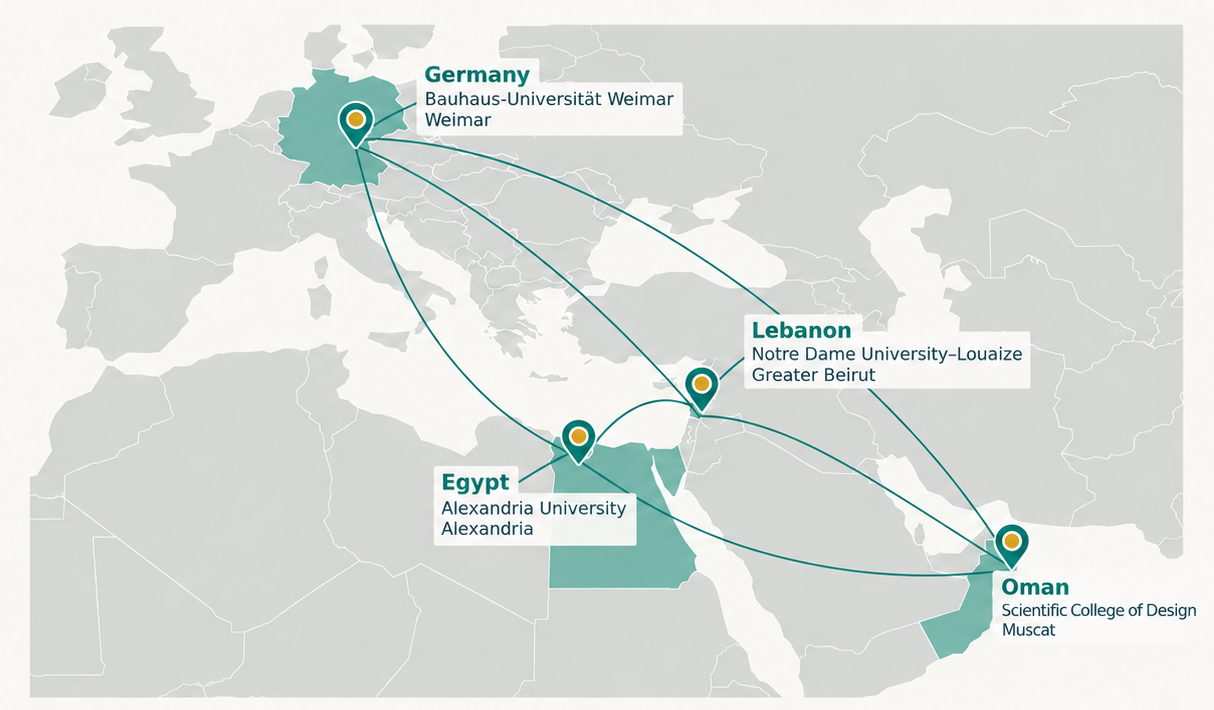
This partnership combines expertise from urban studies, architecture, design-oriented fields and the humanities and social sciences—integrating knowledge from academics, practitioners and societal actors.
By drawing on the diverse strengths and expertise of its partners, the project facilitates the transfer of knowledge, experience and best practices with regard to the general approach to architecture and urban planning, and contributes to the development of relevant competencies within the partner institutions.
Designed as a growing cooperation structure, the partnership seeks to develop further synergies with relevant partners and initiatives and to evolve into a sustainable cross-regional Inclusive Cities network.
Impact
Inclusive Cities seeks to strengthen long-term academic cooperation and support more inclusive, context-sensitive approaches to urban development, design and transformation. Its expected results include enhanced teaching and research capacities, intercultural learning opportunities, public-facing knowledge outputs and stronger links between academia and society.
By connecting academic perspectives with local urban realities, the project contributes to critical knowledge exchange and mutual understanding across regions. It supports students, researchers, teachers and practitioners in developing approaches to address ‘glocal’ urban challenges in their contexts—challenges that are local in their conditions but connected to broader global questions of inclusion, participation and sustainability.
Activities
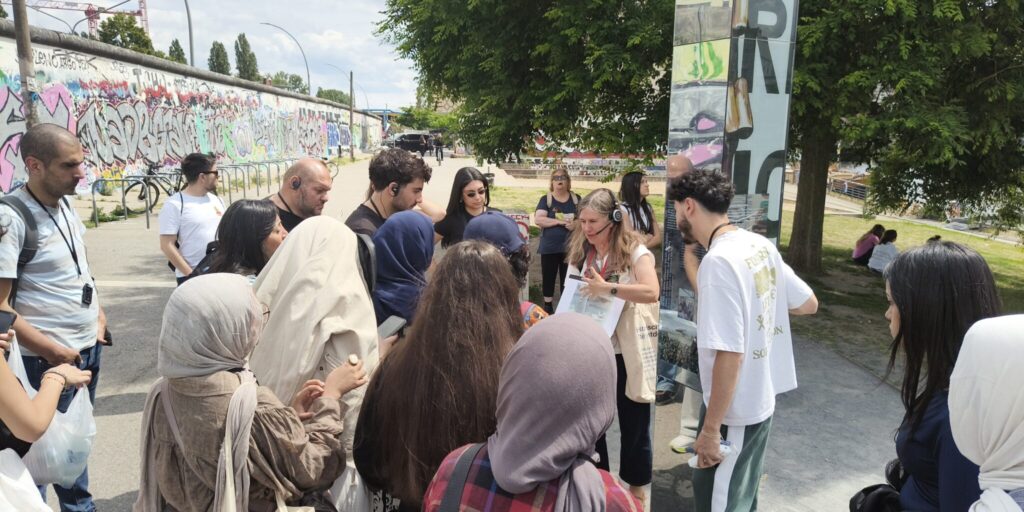
The project is implemented through interconnected activities, including jointly upgraded teaching formats, collaborative workshops/seasonal schools, symposium events, purpose-linked academic stays, and public-facing outputs. Together, these activities are designed to create structured opportunities for exchange, reflection and collaboration across different academic and urban contexts.